Recent Posts
-
Horse-drawn carriages must have caused a Megadrought in Europe in 1540, right?
-
Tuesday
-
Monday
-
Sunday
-
UK facing devastating 36 degree heat — can’t decide whether to use air conditioners or rip them out
-
Saturday
-
Batteries failed on day One: A four day wind drought in South Australia wreaks havoc, high prices
-
Friday
-
The UN wants to be One World Government and it starts with a carbon tax on ships and planes
-
Thursday
-
What if Global Warming was just because something made the clouds go away…
-
Wednesday
-
Snowy 2.0 is the Trillion dollar Black Hole of Australia — sucking in energy, money, land, industrial relations, the dollar, our lifestyle
-
Tuesday
-
Monday
-
Winter Solstice
-
Saturday
-
We were throwing-renewable-energy away at record levels in 2025
-
Friday
-
Pauline Hanson, the centrist, just wants a free market in electricity, and an end to the renewable energy bribery
-
Thursday
-
Blame the Climate Yeti again for making your life more expensive! (It’s a smokescreen)
-
Wednesday
-
The Sunrise Project funneled $343 million from overseas to push net zero
-
Tuesday
-
Monday
-
Sunday
-
The US government has been secretly funding 120 dangerous biolabs around the world
-
Saturday
-
New report shows renewables are a drag on our national productivity
-
Friday
-
Thursday
-
Well, how convenient. AI data centers have arrived to be the fall guy for the Energy Minister
-
Wednesday
-
Billionaires are leaving the room with excuses — Bezos says “AI will solve climate crisis”
-
Tuesday
-
Monday
-
Sunday
-
The Craziest eco laws against Farmers. Let’s check that science…
-
Saturday
-
China cooks the carbon accounting books by 400 million tons
-
Friday
-
The Wind Power Puzzle (add more wind turbines and get the same output)
-
Thursday
-
To save the world, Cement Australia stops burning coal and burns trees instead
-
Wednesday
-
On Fire! US hunger for gas power so large, wait time for turbines blows out to 5+ years
-
Tuesday
-
Monday
-
Sunday
-
Saturday
-
Perth event Saturday May 30th: Green Greed and the Grid
|
New electric vehicles have big fat batteries, which will help solve the problem known as “charge anxiety” (let’s call that the Flat-Bat-Fear).
The new fat-batteries, however, have the small catch that they need two days to trickle charge. Hmm. Then there is the other catch that each slow charger (7kW) is equivalent to adding nearly three houses to the grid. Our Energy Minister Josh Frydenberg predicts there will be one million electric cars on Australian roads by 2030.
You might think this is slow motion train wreck, but we might avoid this if households opt for fast 50kW chargers. In that case we can do the train-wreck at top speed.
Each fast charger will apparently be “like” adding the equivalent of 20, count them, 20 homes.
This is fearmongering obviously — no one is going to want a fast charger when they could leave the car in the garage for 48 hours instead.
Ben Packham, The Australian
New Zealand’s biggest energy distributor, Vector, warned electric vehicle chargers “put a large electrical load on the network”, with even 2.4kW “trickle” chargers adding the equivalent of one additional home to the grid.
Vector’s electric vehicle network integration green paper said the shift to larger batteries would encourage drivers to opt for faster chargers, to avoid a two-day charge. A “slow” 7kW charger would add the equivalent of 2.8 homes to the grid, while a “rapid” 50kW charger would add the equivalent of 20 homes.
It said New Zealand’s power grid could require a $NZ530 million ($500m) upgrade if 7kW chargers were used, and one in four cars on the road were electric vehicles.
Can someone calculate the cost per EV in NZ? Thanks…
9.4 out of 10 based on 95 ratings
 … Scientists are suggesting that a thin layer of floating calcium carbonate can cut sunlight over reefs by 30% and save some high value reefs from bleaching.
This should work well on all the reefs that evolved in the last fifty years and which don’t have moving water.
But half of the coral genera around today have been around since the Oligocene (23-34 million years ago) and for most of that time the oceans were warmer. (Lucky human civilization evolved just in time to save all these reefs from extinction.)
Bleaching has probably been going on for millions of years longer than we have been scuba diving with cameras to film it. We only discovered coral bleaching in the 1980s. Not surprisingly, marine life has ways to adapt to heatwaves by chucking out the symbionts that don’t thrive in higher temperatures and replacing them with new inhabitants that do.
Yes, let’s cover our most diverse and important reef systems with an artificial layer that cuts incoming sunlight by a third — What could possibly go wrong?
Scientists from the Australian Institute of Marine Biology say tests of a floating “sun shield” made of calcium carbonate show it could protect the reef from the effects of bleaching.
“It’s designed to sit on the surface of the water above the corals, rather than directly on the corals, to provide an effective barrier against the sun,” Great Barrier Reef Foundation managing director Anna Marsden said.
The trials, headed by the scientist who developed the country’s polymer bank notes, on seven different coral types found that the protective layer decreased bleaching of most species, cutting off sunlight by up to 30%.
Marsden said it was impractical to suggest that the “sun shield” – made from the same material found in coral skeletons – could cover the entire 348,000 square-kilometre reef.
“But it could be deployed on a smaller, local level to protect high value or high-risk areas of reef,” she added.
It’s not like the whole ocean is at one temperature and one constant pH
There is and always has been constant turbulence in the oceans and marine life is used to it. Ocean acidification happens every day in some places — no biggie. There is a large daily swing after sunset in pH over many reefs. Far from that being a problem, fish seem to behave better when artificial tanks mimic these natural swings. Indeed a bit less alkalinity is better for hundreds of species. Some coral reefs thrive in a more acidic ocean, and we appear to have a pretty big safety margin: farmed fish seem to cope fine with CO2 levels that are even fifty times higher than today.
The story of life on Earth is that everything keeps shifting and biology adapts. In one situation, when trapped, salt water fish evolved to become freshwater fish in just fifty years*. In private, NOAA experts will admit they can’t name one single place that is affected by ocean acidification.
While some estimates said 90% of the Great Barrier Reef was bleached recently, other studies said it was more like 5%. Even the head of the Great Barrier Reef Marine Park Authority has said that activists are distorting and exaggerating the threats. The Great Barrier Reef is recovering faster than scientists expected. Possibly because it is 3,000 kilometers long and has over a hundred tough spots that survive and replenish the rest.
Other ideas to save the reef include putting shade cloth over the Great Barrier Reef to save it from climate change or using giant fans to stop bleaching.
Coral reefs first became widespread about 200 million years ago. It takes some kind of delusional hubris to think they suddenly can’t survive without human help, or that we have any idea what we are doing messing with a complex well developed system.
Of course, if you work at an Australian university and say that, you too could face misconduct charges, like Peter Ridd.
Image: Wikimedia, author Wise Hok Wai Lum: Flynn Reef 2014.
*Error corrected. This originally said “six astomishing months” but should have said “fifty years”, which on evolutionary time frames is still incredibly fast.
9.5 out of 10 based on 84 ratings
SBS tells us that it started in Australia (sorry), is observed by millions, and now occurs in 187 countries. (Since only one person has to turn off one light to qualify, I want to know which seven countries didn’t?)
To mark Earth Hour this year, WWF asked the public to make a “promise for the planet” – a small step in their own lives to help reduce their environmental footprint – such as refusing plastic cutlery or carrying a reusable coffee cup. While these promises are small individually, WWF stated that “millions of people taking these actions together will have a massive, powerful impact”.
Which day was EarthHour Day in Australia — Spot the difference:
Was this EarthDay?
 The Australian National Electricity Grid last weekend.
Or this?
 The Australian National Electricity Grid last weekend (the other day). Source: Aneroid 24th March and Aneroid 25th March.
Notice the Earth-saving electricity dip at 8:30pm when millions turn off their lights!
Megagrams of carbon was saved. (Maybe.)
Take it from WWF — this is the sum total effect of all the voters that care about climate change.
There were similar successes in California (WUWT) and in the UK (Paul Homewood).
The word you are looking for is “noise”.
Like every carbon scheme…
PS: The top graph was Earth Hour Day in Australia.
_____________
*It must be true, the website says so.
8.6 out of 10 based on 63 ratings
…
5.7 out of 10 based on 21 ratings
Remember EarthHour? Tonight is the night to rejoice in electricity from 8.30-9:30pm.

Some of those fossil fuels have been waiting for 100 million years to return to the sky.
Things you can do:
- Turn on all the lights you can find — Put on the party lights, the patio light, the pool light, the mozzie zappers, unpack those Christmas decorations. Get out your torches. Switch the movement detector spotlights to continuous operation. (Involve the kids — they love to help).
Keep reading →
9 out of 10 based on 111 ratings
I’ll be there for the first time having great fun explaining how to burn billions and ruin reliable electricity — which was a big hit here in Perth.
How to destroy a perfectly good electricity grid in three easy steps

The World is watching Australia. Despite being handicapped with abundant resources, we’ve turned ourselves into an international spectacle with rampant blackouts, flying squads of diesel generators, and the highest electricity prices in the world. An achievement like this does not come easily.
The grand experiment unfolds around us, as the nation discovers why “free” energy isn’t free, why storage is deceptively expensive, yet baseload is deceptively cheap.
Discover the Joy of Blackouts!
See the feisty, fabulous Ian Plimer, and Nick Minchin (former Senator, skeptic, who starred in the ABC documentary and invited David and me onto it). Not to miss Sinclair Davidson from Catalaxy, Graeme Young from Online Opinion (remember his great work analyzing Lewandowsky). Pretty much all the Libertarian M.P.s who want less regulation and an end to running the nation by Groupthink. People like Peter Phelps, Warren Mundine, David Leyonhelm and Aaron Stonehouse.
Ben Heard will speak too – I’m looking forward to meeting him — he wants to reduce carbon but scoffs at renewables and argues the only way to do it is with nuclear power. His understanding of how grids work and the failings of renewables is excellent.
There are international speakers too: people from Atlas, CATO, Ilya Shapiro, Jeffrey Tucker, and M.P. David Seymour from New Zealand.

Reserve your spot now at www.alsfc.com.au and save up to $50 off the standard price with the code Nova18!
8.7 out of 10 based on 57 ratings
Terrible fires destroyed 69 houses and 30 caravans and another 39 houses were damaged in Tathra in SE Australia last Sunday.
Greens Chieftain, Richard Di Natale, waited at least two minutes before exploiting their pain to make advertisements for the Green Industrial Complex:
Government’s climate stance ‘like NRA’s on guns after a massacre’
Greens leader Richard Di Natale has controversially likened the government’s refusal to recognise climate change as a cause of the southern NSW bushfires to the National Rifle Association’s failure to acknowledge the role of gun laws in preventing mass shootings in the US.
Asked what the government could do about a global problem when Australia accounted for just 1.3 per cent of global greenhouse gas emissions, Senator Di Natale said the risk of extreme weather events could be mitigated if the nation transitioned “away from coal”.
“We have to stop the Adani mine from being built. We have to recognise that coal doesn’t have a long-term future. We need to ensure that we take advantage of the huge jobs* that come with building more solar farms, more wind farms,” he said.
According to the Greens, fires are mostly a one variable event. More CO2 means more fires and fires can be prevented if we buy enough solar panels and Tesla batteries. The issue is not fuel loads, fallen power lines, or houses built close together and close to tons of tall flammable carbon forms with leaves. The damage toll is not affected greatly by turf battles, a lack of communication, poor mobile reception or decisions to say “No thanks” to extra fire trucks.
If only we converted the whole country to solar panels, no building would ever burn through bushfire — (only through solar malfunction. Like BeaverCreek Walmart, last week).
Power lines were the likely cause of the devastating bushfire that swept through the small town of Tathra on the New South Wales south coast on Sunday, a preliminary investigation has found. The investigation by the Rural Fire Service has found “electrical infrastructure on Reedy Swamp Road” as the likely cause.
Those power lines are managed by Capitalist Pigs... the NSW government.
… the Electrical Trades Union said there were “serious questions to answer” over cuts to funding for power line maintenance in the state.
The union alleged that, over the last seven years, Essential Energy had sacked almost 40% of its workforce, underspent on its operating expenditure by $129m and slashed capital expenditure by 38% since 2012 due to restrictions imposed by the Australian Energy Regulator.
So rules made by one government agency caused problems for another government agency:
The ETU’s NSW assistant secretary, Justin Page, said the funding cuts “may be placing the public at serious risk”. “The NSW government has been focused on cutting costs at Essential Energy, including slashing maintenance and capital works expenditure, while at the same time maximising profit,” he said.
Maximizing profit?
Government agency, Capitalist pig, what’s the difference?
Companies that compete make profits. Agencies with a government monopoly collect taxes.
“The bushes here haven’t been burnt off for that many years (and) there was that much energy and force in it that once it started, you couldn’t stop it.
“I think there should be a lot more backburning happening, which we’ve been fighting for and we can’t get it because of the new laws – it’s ridiculous.”
… and the turf war:
The Fire Brigade Employees Union claimed many of the 69 houses lost in the fire could have been saved if offers of assistance from metropolitan fire brigades weren’t rejected by the Rural Fire Service.
Our thoughts are with those who have lost so much.
*Let’s talk about the “huge jobs” generated by wind and solar, and let’s also talk about the even bigger job losses that go with that. For every Green job created, between two and five other real jobs, that did something useful, are lost. But that’s only data from Spain, Italy, Britain, and Germany.
** Guns laws? Not so simple either: States with more guns don’t have more gun-murders. See also JustFacts for interesting graphs and Bill Whittle on “per capita murder rates”.
9.4 out of 10 based on 63 ratings
…
8.7 out of 10 based on 23 ratings
In a bombshell, Scott Pruitt is expecting scientists to act scientifically.
In the US the EPA has been making rules that cost billions based on studies from groups that refused to publish their data. Regulations like The Clean Power Plan were estimated to cost $8.4 billion and magically return $14 – $34 billion in “health and climate benefits”. Scott Pruitt plans to pop that bubble.
Michael Bastach, Daily Caller:
Environmental Protection Agency (EPA) Administrator Scott Pruitt will soon end his agency’s use of “secret science” to craft regulations.
“We need to make sure their data and methodology are published as part of the record,” Pruitt said in an exclusive interview with The Daily Caller News Foundation. “Otherwise, it’s not transparent. It’s not objectively measured, and that’s important.”
“If we use a third party to engage in scientific review or inquiry, and that’s the basis of rulemaking, you and every American citizen across the country deserve to know what’s the data, what’s the methodology that was used to reach that conclusion that was the underpinning of what — rules that were adopted by this agency,” Pruitt explained.
My only minor, tiny, complaint is that there is no such thing as “secret science”. If it can’t be replicated, it isn’t science. What Pruitt is stopping is Fake Science.
The Union of Concerned Scientists immediately leapt to defend the right of certified scientists to issue declarations that no one could test or assess.
“A lot of the data that EPA uses to protect public health and ensure that we have clean air and clean water relies on data that cannot be publicly released,” Union of Concerned Scientists representative Yogin Kothari told E&E News.
“It really hamstrings the ability of the EPA to do anything, to fulfill its mission,” Kothari said.
Evidently, the Union of Concerned Scientists aren’t too concerned about whether “scientists” are acting scientifically. Like all unions, what matters is pay, power and working conditions, never mind about the Scientific Method.
In the Australian version, the BoM swamps skeptics with data, but admits it keeps its methodology secret. Only fully trained members of the sacred guild can play data games and issue prophesies.
Tellingly, environmentalists and democrats oppose the idea of transparent data.
UPDATE: As Joe Bast says — Congratulations to Steve Milloy, Jim Enstrom, Stan Young, Robert Phalen, Willie Soon, and Lamar Smith for leading a years’ long effort to restore sound science to EPA.
h/t Robert, Scott of the Pacific, Pat, Jim S.
9.7 out of 10 based on 143 ratings
 Druids at work The voters smacked the Greens yesterday, so today the Greens smack the voters. Richard Di Natale, Green Chieftain, blames the recent spate of storms and fires for the governments failure to change the global weather.
The Australian
The Greens have blamed the federal government’s failure to address climate change for a cyclone and bushfires which have ravaged communities across Australia over the past 48 hours.
Cyclone Marcus has swept across the Northern Territory, bringing down power lines and hundreds of trees in what Chief Minister Michael Gunner described as the biggest storm to hit the Top End in 30 years.
In Tathra on the NSW South Coast, at least 70 properties have been destroyed, while thousands of hectares of farmland, livestock and 18 homes have been lost in four blazes which were started by lightning strikes across South West Victoria.
In an anti-coal speech in the Senate today, Greens leader Richard Di Natale said the government had been doing “everything it can to slow this country’s transition to renewable energy”.
–Joe Kelly, Andrew Burrell
Four thousand IPCC-Chief-Gurus said cyclones will become “less frequent” but “more intense”. Which is why Cyclone Marcus was a Category Six … Two.
Apparently climate change just makes less cyclones.*
Marcus had gusts to 130km/hour, thankfully, no buildings fell down and no deaths were reported.
If we reduce global CO2 by 70ppm at a cost of $42 billion trillion dollars Darwin might be lucky enough to get storms like this instead:
 Darwin, 1974 — when CO2 was 330 ppm That 1974 pre-climate-change storm had gusts to 240 km/hr, razed 70% of the town and killed 65 people.
Evidently climate change causes stronger buildings, or perhaps that has something to do with fossil fuels?
But this week in Darwin the local hardware stores have run out of chainsaws. Forty three years ago they ran out of walls.
Tomorrow: the Climate Druids lecture us on Fires.
__________________
*Thought for today: Looking at the cyclone trend graph — ponder if we are returning to the cooling period of the 1950’s-70s? It’s possible we may get more storms again, but for the opposite reason. As it happens another cyclone may already be on the way?
Images: Wikimedia Druids | ABC NEWs | Darwin, 1974, Courtesy – National Archives of Australia A6135, K29/1/75/16
9.4 out of 10 based on 78 ratings
A funny thing happens when you line up satellite and surface temperatures over Australia. A lot of the time they are very close, but some years the surface records from the Australian Bureau of Meteorology (BOM) are cooler by a full half a degree than the UAH satellite readings. Before anyone yells “adjustments”, this appears to be a real difference of instruments, but solving this mystery turns up a rather major flaw in climate models.
Bill Kininmonth wondered if those cooler-BOM years were also wetter years when more rain fell. So Tom Quirk got the rainfall data and discovered that rainfall in Australia has a large effect on the temperatures recorded by the sensors five feet off the ground. This is what Bill Johnston has shown at individual stations. Damp soil around the Stevenson screens takes more heat to evaporate and keeps maximums lower. In this new work Quirk has looked at the effect right across the country and the years when the satellite estimates diverge from the ground thermometers are indeed the wetter years. Furthermore, it can take up to six months to dry out the ground after a major wet period and for the cooling effect to end.
In Australia rainfall controls the temperature, which is the opposite of what the models predict, but things are different in the US. (In the US, temperature affects rainfall).*
In Australia maximum rainfall occurs in the summer but it is highly variable, whereas in the US, while the summer rain is heavier, it’s the winter precipitation where the big variations occur. This seasonal pattern makes a big difference. . Both the Australian pattern and the US pattern appear in other places around the world, but the models only have the one scenario. It appears the modelers figured out the situation in New Jersey and programmed it in for the rest of the world, but whole zones of the world are behaving quite differently.
Models predict that temperature affects rainfall — but in Australia the rainfall affects the temperature. No wonder these models are skillless at predicting temperature and on rainfall — they are even worse.
As far as I know this is new and original research. Tom Quirk has run it past a few people, including John Christy of UAH who notes that this has been seen elsewhere. Let’s keep up with the peer review…
UPDATE: I’ve discovered Ken Stewart reported this correlation back in 2015. So for the record — his post was the first: “over three quarters of the difference between surface and atmospheric temperature anomalies is due to rainfall variation alone.” Some great graphs there….
— Jo
* Added for clarity. A more detailed post coming very soon.
In Australia, the bulk of the rain,
Falls in summer across its terrain,
With less heat above ground,
Where temp. readings are found,
Which the surface through drying would gain
— Ruairi
Why Satellites and Surface Thermometers Don’t Agree: Explaining the Difference in Australia with Rainfall
Original Research and Guest Post by Tom Quirk
There is continuing questioning of the relationship of rainfall and temperature. Does temperature determine rainfall or is it the reverse…? The following analysis is a comparison of rainfall and near surface (BOM) and lower troposphere (UAH) temperatures for continental Australia.
This analysis shows that rainfall modifies surface temperatures in Australia.
Figure 1 shows a temperature comparison. The BOM annual temperatures are averaged from 1979 to 2017 and then normalized to the UAH average, an adjustment of -0.33 0C so the two different time series can be compared.
The temperature increases are:
UAH 0.176 +/- 0.036 0C per 10 years
BOM 0.154 +/- 0.048 0C per 10 years
There is no significant difference in trends at 0.022 +/- 0.030 0C per 10 years.
Yearly measurements and analysis
While there is a good correlation of surface (BOM) and lower troposphere temperatures, there are two periods, 1999 to 2001 and 2010 to 2012 where the UAH satellite temperature anomalies are 0.40C above the near surface measurements of the BOM.
 Fig 1: UAH and BOM Australian annual temperatures where the BOM anomalies have been normalized to the same mean value as that of the UAH measurements.
Bill Kininmonth, former head of Australia’s Climate Centre, suggested that this could be linked to periods of high rainfall as the dampened surface would lower the measured temperatures due to evaporation. This fits with other work by Bill Johnston showing a link between rainfall and temperature at individual sites.
A comparison of Australia wide rainfall sourced from the BOM (Figure 2) and the difference of UAH – BOM temperature anomalies (Figure 3) show that there is a correlation.
 Fig 2: Australian annual rainfall – source BOM
Keep reading →
9.6 out of 10 based on 59 ratings
The government running the renewables crash-test-dummy state has lost
 In South Australia, Jay Weatherill is gone. Resigned. Tally so far: Libs win 24 seats, Labor 18. Though according to commenters SA voters were choosing between Lite-Left and Hopeless-Left. The new premier will likely be less-bad. Xenophon (small alternate non-establishment player) was crushed. He didn’t side with either Labor or Libs, so voters probably felt they couldn’t afford to sit on the fence and risk more years of Weatherill’s reckless industry-destroying state government. In South Australia, Jay Weatherill is gone. Resigned. Tally so far: Libs win 24 seats, Labor 18. Though according to commenters SA voters were choosing between Lite-Left and Hopeless-Left. The new premier will likely be less-bad. Xenophon (small alternate non-establishment player) was crushed. He didn’t side with either Labor or Libs, so voters probably felt they couldn’t afford to sit on the fence and risk more years of Weatherill’s reckless industry-destroying state government.
The Greens are down from 8.7% to 6.6%, a fall of 25% in their popularity. (Not that I could find any news headlines to that effect).

The message for the soft left:
Chris Kenny: [A Lib win] … will flash a warning to Labor in Victoria, Queensland and Canberra about the perils of ambitious renewable energy targets prioritising climate gestures over electricity affordability and reliability.
The Libs appear to have made the most of hi-tech analytic campaigning. The Kochs and others in the US have set up i360:
Through i360 the SA Liberals believe they have progressed to a new level of targeted campaigning… the MP called up a marginal seat, much like finding a suburb on Google Maps, then zoomed in to a street where pins identified addresses deemed to house swinging voters. Deeper dives on households contained genders, ages, voting intentions or lack thereof as well as policy interests. The information is collated from the party’s existing Feedback system, updates from doorknocking and calls, responses to surveys conducted via email, online or phone calls plus census data and the harvesting of social media data. This is Big Brother meets grassroots campaigning. Neither the data nor the technology is much use without quality information fed in and strong analysis leading to the right strategies, along with diligent personalised attention in follow-up visits and communications.
Billionaire US Republican sponsors Charles and David Koch are major investors in the firm, which openly canvasses only for “free-market” candidates. The SA Liberals purchased a product licence and have worked with i360 to modify systems for compulsory and preferential voting. Motivated by the frustration of 2014 where, despite a huge popular vote win, just a few hundred votes in the right seats would have made all the difference,…
–The Australian
The Libs are offering only 40,000 household batteries compared with Labor 50,000. They are also planning a stronger link to NSW. That will enable the good people of NSW to share the pain of high power prices experienced first in SA and now in Victoria due to the way intermittent generators destroy grid economics.
An interconnector to NSW will “spread the misery” – as both RickWill and Graeme No 3 point out. SA will be able to milk the national RET subsidies longer, and avoid paying for its own stable base. In NSW, increasing the access to subsidized solar and wind power will hurt the cheap providers there, destroying the profits of the cheapest generators.
In Victoria, in one seat, Greens lose to Labor, blame internal bickering
 In Victoria a byelection was held in the inner-latte seat of Batman. Conservatives (Liberals) didn’t run. Labor won, though the Greens started out as favourites. In Victoria a byelection was held in the inner-latte seat of Batman. Conservatives (Liberals) didn’t run. Labor won, though the Greens started out as favourites.
John Ferguson: “The Batman result is a disaster for the Greens and a significant campaigning achievement for Labor.”
As usual, the Greens search anywhere but their hypocritical policies. They could try having principles like caring about the environment instead of supporting big-banks, big business, and giant supernational unaccountable institutions. They could have an interest in science instead of doing their best to destroy it through namecalling to silence debate. If they had even one principle above “being elected” they would have some foundation instead of being the third leg, fashionable extra for people seeking vanity points.
Greens leader “blames internal ‘sabotage’ for loss”
Keep reading →
9 out of 10 based on 56 ratings
A hundred billion from a bank in Spain,
To change Earth’s climate, will be spent in vain.
To subsidize all solar panels, now,
Australia milks the poor as their cash cow.
The bats that eat mosquitoes, fear windmills,
Most likely, as they sense a threat that kills.
Since CO2 is life’s essential gas,
To denounce it first, then market it is crass.
_Ruairi
9.3 out of 10 based on 20 ratings
The first year’s data is out — Australia’s secret Emissions Trading Scheme is up and running, it’s small, inefficient, and pointless, but all the government needs to do is raise those caps, and the carbon trading monster octopus could wrap around on half our economy.
Australian carbon credits are for sale (called ACCU’s), the price was $14-$18 and the total volume was probably around $7 million. This supposed tiny “free market” marvel could not even match the $11/ton price that Abbott’s direct auctions achieved — proving yet again how inefficient economy-wide incentive schemes on essential molecules are. If the caps were raised the price would rocket. (Remember Labor’s carbon price ended up being $5310 per ton.)
What do you mean, you didn’t know Australia had a carbon credit market?
Obviously, you havent been spending your weekends reading the finer points of our legislative instruments. The legislation for this was voted on in the last sitting of Parliament before Christmas of 2015 while Turnbull was a new PM. There was no public debate, no parliamentary discussion and no news coverage of it til May the next year, and it was barely covered at all during the election which occurred the day after this “market” started. For some reason Turnbull didn’t brag about his master success — achieving what Rudd and Gillard failed to do. This is because he is a self-effacing and humble man … or maybe he knew his voters hated it, and he hoped to deceive them.
The Press Release from the Carbon Market Institute, this week:
Data released on Wednesday by the Clean Energy Regulator indicates that under the first year of the Government’s ERF Safeguard Mechanism sixteen facilities have exceeded emissions limits, collectively surrendering 448,097 Australian Carbon Credit Units (ACCUs) to meet compliance obligations.
“Today’s announcement by the Clean Energy Regulator clearly indicates that Australia has a functioning carbon market,” says Peter Castellas, Chief Executive Officer of the Carbon Market Institute.
“Companies that had a liability under the Safeguard Mechanism were able to purchase ACCUs directly from project developers or on the secondary market – and the market was able to meet supply,” says Castellas.
About a dozen large emitters caught by the safeguard had to buy an estimated 400,000-450,000 tonnes of Australian Carbon Credit Units, pushing the price to $17-18/T as the 28 February deadline for compliance approached. Most of the trade was in the $14-15/T region.
Potter’s article mentions Tony Abbott fully ten times — slavishly trying to pin this as an Abbott creation. The legislation was drafted two weeks before Abbott was ousted. Was Abbott even aware of the details — would he have allowed this to go through to be voted on? (It would be nice to get clarification on this.) Abbott certainly didn’t want this, and we have Gore and Clive Palmer to thank for it.
Coming next — International Credits — Australians to pay money to foreigners for atmospheric nullity
This market appears to be Australian credits only, but the government made it clear they want to accept international credits next. You didn’t know? That news was also released just before Christmas (when all poison news is announced). International carbon markets are loved by large financial houses like Goldman Sachs, and Deutsch Bank who broker the deals. They also serve supranational unaccountable large governmental bodies like The World Bank and the UN.
Turnbull is not called The Member for Goldman Sachs for nothing. Who does he serve?
Whatever you do, don’t tell the voters
Australians voted emphatically against carbon taxes and carbon markets in two elections. Abbott won a landslide 90 seats with a blood oath in 2013. Then Turnbull ran, didn’t mention his carbon-desires, and barely scraped in. Elections turn on this issue. Gillard would have lost in 2010 if she hadn’t lied about a carbon tax (she only won by 400 votes in Corangamite). Would Turnbull have lost in 2016 if it was an election topic? He easily could have, but even if he didn’t — in a transparent campaign he would have been forced to make some public promises or vows. At the very least, minor parties would have grabbed more power as the Liberal base fled, and Turnbull would have had to make deals with them to form government.
Democracy is not supposed to work by keeping voters in the dark.
Some things were never meant to be in a free market — like basic molecules of life. To recap on the features of a “carbon price”: — The government sets supply and demand and enforces it with threats of jail. This is as fake and unfree as it gets.
The players in a carbon market include “every living thing” on the planet plus oceans, dead peat and some rocks. Most players can’t play, and the product is based on the absence of an invisible gas, and sometimes even the “intentions” of the players. Accounting is nigh on impossible — we still don’t even know all the big drivers of natural emissions and sinks.
Like all markets that were never meant to be, carbon markets feed crime and corruption, fraud, and financial sharks. It’s prone to cronyism where exemptions are granted according to marginal seat status or the whim of a politician. Australia needs one like we need a massage from the mafia.
The Press Release from the Carbon Market Institute, 14th March, 2018
9.8 out of 10 based on 59 ratings
Pierre Gosselin has found a new study showing bats really don’t want to be around wind turbines. The effect is so strong there are 20 times as many bats around normal comparable sites compared to sites with wind turbines.
I can’t imagine why bats with sensitive acoustic gear don’t like giant infrasonic blades, spinning at 200km per hour and carving a two acre sweep with every turn.
But when a turbine moves into the area, Bat-real-estate values must plummet:
The result of the study demonstrates a large effect on bat habitat use at wind turbines sites compared to control sites. Bat activity was 20 times higher at control sites compared to wind turbine sites, which suggests that habitat loss is an important impact to consider in wind farm planning.
 … What about the insects?
Since these are insect-eating bats, the next obvious question is whether mosquitoes are 20 times as common around wind turbines, or whether they hate the turbines too.
Has anyone even looked at this? Think of the possibilities: Are wind farms mosquito repellent, or will wind farms help spread dengue fever?
Apparently this was one of the first studies to look closely at the impact of wind farms on insectivorous bats in tropical hotspots. If so, we built some 350,000 wind turbines, then — then, we thought we might check to see if it affected bats?
Where. were. the environmentalists?
And doesn’t anyone care about mosquitoes…
REFERENCE
Millon et al (2018) Wind turbines impact bat activity, leading to high losses of habitat use in a biodiversity hotspot, https://doi.org/10.1016/j.ecoleng.2017.12.024
9.4 out of 10 based on 56 ratings
 … The Western media was apoplectic about Russia!Trump!Hillary! but apparently missed the real game. Behind the scenes, the Russians were feeding the eco-gullibles “Frack-hate” campaigns in the UK and elsewhere in the hope of curbing the threat Fracking posed to Russian gas exports. It’s paying off — British people are buying Russian gas.
Did the Russians capture Victoria and South Australia? Who knows. The ABC won’t ask, and environmentalists won’t tell. Possibly Putin didn’t need to bother — we’re pretty good at destroying our export industries ourselves.
Before we’d even had a debate here in Australia, everyone “knew” fracking was bad.
h/t to GWPF which has a whole string of stories.
Green Russian Anti-Fraking Campaign paying off: Britain becomes more dependent on Putin’s Gas
David Sheppard, Financial Times, 14/03/18
Half of Britain’s imports of liquefied natural gas so far this year have come from Russia, illustrating how UK households have started sending more money to Moscow after Vladimir Putin made boosting exports of the super-cooled fuel a priority.
Tom Rogan, National Review Online, Feb 2015
Today, Russia is waging another active-measures campaign. But this time Russia’s target is fracking. The facts are clear. Fracking, which is revolutionizing energy politics, offers a cheap, new source of global power. But that’s not all. In offering Europe independence from Russian energy exports, fracking poses a direct challenge to Russia. Because Putin depends for revenue on his oil and natural gas-exports, fracking’s cheaper alternative presents him with a big problem. Indeed, lower oil prices are already driving Russia’s economy into recession.
Facing this threat, Russian intelligence has implemented a three-pronged strategy.
First, Russia has ramped up covert payments to environmental groups in the West. By supporting well-intentioned environmentalists with hard cash (often without their knowledge), Russian intelligence gains Western mouthpieces to petition Western audiences in its favor. Based on Russia’s prior record, we can also assume that Putin has funneled money through intermediaries to sympathetic Western politicians.
Second, the Russian SVR (CIA equivalent) has directed its spies to gather intelligence on the American energy industry….
Finally, Russian intelligence’s biggest cover operation — its RT “news” outlet — is undertaking a massive propaganda campaign against fracking….
Protesters appeared out of nowhere
Romanian officials including the prime minister say that the struggle over fracking in Europe does feature a Goliath, but it is the Russian company Gazprom, not the American Chevron.
Vlasa Mircia, the mayor of this destitute village in eastern Romania, thought he had struck it rich when the American energy giant Chevron showed up here last year and leased a plot of land he owned for exploratory shale gas drilling.
But the encounter between big business and rural Romania quickly turned into a nightmare. The village became a magnet for activists from across the country opposed to hydraulic fracturing, or fracking. Violent clashes broke out between the police and protesters. The mayor, one of the few locals who sided openly with Chevron, was run out of town, reviled as a corrupt sellout in what activists presented as a David versus Goliath struggle between impoverished farmers and corporate America.
“I was really shocked,” recalled the mayor, … “We never had protesters here and suddenly they were everywhere.”
Austin Yack, National Review, July 2017
In 2012, Bulgaria issued a shale-gas license to Chevron. Immediately, activists pounced, peddling hyperbolic warnings that fracking pollutes drinking water. (In reality, the practice carries a minimal risk of groundwater pollution when done properly.) Protests erupted, and the Bulgarian government caved, banning fracking entirely. Gazprom, Russia’s state-run energy company, proceeded to give the Bulgarian government a 20 percent discount for signing a ten-year contract for the provision of natural gas.
Members of the Sierra Club were clueless about where the money came from:
According to the reports, entities connected to the Russian government are using a shell company registered in Bermuda, Klein Ltd. (Klein), to funnel tens of millions of dollars to a U.S.-based 501(c)(3) private foundation, the Sea Change Foundation (Sea Change). This money appears to move in the form of anonymous donations. Sea Change then passes the money originating in Russia to various U.S. 501(c)(3) organizations such as the Sierra Club, League of Conservation Voters Education Fund, and others. These funds are dispersed as grants that will be used to execute a political agenda driven by Russian entities. The purpose of this circuitous exchange of foreign funds is to shield the source of the money.
— Rep. Lamar Smith and Randy Weber
And were the environmentalists concerned that they were being used as useful idiots by the Russians. Are we kidding? They’re in so deep the greens think they are using the Russians.;-)
And the ABC/BBC/etc will enlighten them any day…
Ruairi
In the West, when it comes to end fracking,
Certain groups will not be found lacking,
If it means the destruction,
Of cheap fuel production,
The Left and the Greens give it backing.
–Ruairi
h/t Pat
9.3 out of 10 based on 76 ratings
….
7.6 out of 10 based on 19 ratings
And we wonder why electricity bills are rising?
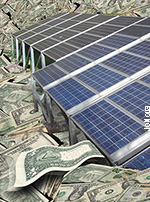 Many Australians don’t realize that those without solar panels pay are forced to pay for those who do through their electricity bills. That pain point is about to launch itself above the horizon and into public view. For those readers with solar panels (there are a lot) this is not about you, this is about the system. Our badly managed grid is now so obscenely inefficient and expensive, droves of people are installing solar panels because they feel they have no choice. Many Australians don’t realize that those without solar panels pay are forced to pay for those who do through their electricity bills. That pain point is about to launch itself above the horizon and into public view. For those readers with solar panels (there are a lot) this is not about you, this is about the system. Our badly managed grid is now so obscenely inefficient and expensive, droves of people are installing solar panels because they feel they have no choice.
Tony Abbott says “Australians are paying too much for our emissions obsession”.
NSW MP Craig Kelly: “It’s effectively a reverse Robin Hood scheme where we are increasing the electricity prices on the poor to reduce electricity prices for the rich.”
As Jo says: We could have put that billion into a new hospital. Instead we put magic squares on our houses, hoping to get nicer weather.
Solar Subsidies must end
The Clean Energy Regulator has released figures showing that more than 1057 megawatts of capacity was installed last year, equating to 3.5 million solar panels being fixed to rooftops.
Industry analysis obtained by The Australian reveals the cost of small-scale technology certificates — created to increase the incentive to install rooftop solar — shows the value of the subsidies was $500 million last year.
The solar industry is expecting the subsidy to increase to about $1.3bn this year….
— Joe Kelly, The Australian
With 8 million households that works out as $100 extra added onto electricity bills this year — on top of the $60 per household we paid last year for solar subsidies. That will be $160 total per household, just for solar subsidies, this year alone.
Former prime minister Tony Abbott is demanding action… [he] led a chorus of Coalition backbenchers urging the government to end the small-scale renewable energy scheme, with Liberal MP Craig Kelly declaring the policy was more economically damaging than the Rudd government’s home insulation scheme.
“Australians are paying far too much for our emissions obsession. Government must end subsidies for new renewables,” Mr Abbott said yesterday.
Nationals senator John Williams said the policy forced struggling families to subsidise rich people’s solar installations.
Mr Kelly, chairman of the Coalition backbench committee for energy and the environment, said the government should halve the maximum certificate price to $20, followed by another halving in its value next year before it is phased out a decade early in 2020.
When people find out just how expensive, toxic and pointless this is, there will be a riot.
The Minister Josh Frydenberg talks about ancient history and promises Santa is coming:
Energy Minister Josh Frydenberg said the Australian Energy Market Commission had found the average cost to households over the past five years was about $29 a year, with the price peaking in 2012 at $44 for the year. “The AEMC forecasts residential electricity prices will fall over the next two years as renewable energy, including small-scale solar supported by the Renewable Energy Target, enters the system,” Mr Frydenberg said.
Giles Parkinson at Reneweconomy calls this a “right wing push” to slash “incentives”
Don’t threaten the cash cow! In parasite-language a subsidy is not a subsidy, it’s an “incentive”. A sensible request not to force the poor to pay for the rich is labeled an ideological “right wing” push. And when you don’t have an answer, blame the Murdoch media for standing up for poor consumers.
After the namecalling, the claim that rooftop solar is helpful:
Criticism of the small-scale solar scheme invariably ignore the considerable benefits of having such a large amount of rooftop solar in the grid.
Network owners and operators in all states have highlighted how rooftop solar has reduced and deferred the events of peak demand, thereby reducing the cost of wholesale electricity because there is less need for peaking plant and less opportunity to trade on scarcity.
Nice theory, shame about the facts. Wholesale electricity prices aren’t cheaper, they doubled. For the total cost of all the solar panels, and batteries, and now the Snowy Money Scheme we could have built a new cheap coal plant [Or maybe three for $10b! h/t Graeme no.3]. The fact is that when Australians didn’t have much solar power, they had cheap electricity. Same is true all over the world.
And so much for “not trading on scarcity” — those solar panels didn’t stop $400 million of non-scarce profiteering in a two day spike in January.
Then there is the pathetic argumentum ad populum:
… rooftop solar is more popular than it has ever been – including when some state governments offered overly-generous feed-in tariffs in 2010, 2011 and 2012.
Yes and coal power is more popular than it has ever been with 62 countries building 1600 new coal plants. Perhaps they are all stupid and we the only ones who can see the obvious blinding truth? Is Jay Weatherill the only genius running a state or is he the gullible fool who believes the green industry propaganda and thinks the ABC has impartial reporters?
Rooftop solar is only popular because our grid is so screwed people feel they can’t afford electricity any other way.
One in five houses have solar panels. What happens if we all got solar?
This is only the tip of the iceberg. Total subsidies for wind and solar is more like $5 billion or $600 per household.
Madness.
h/t Pat
9.3 out of 10 based on 99 ratings
 Tim Flannery, 2004, The West Australian. Flannery will be on Q&A tonight (bet you can’t wait, copy your questions and tweets below please!). Let’s check the exact wording of his original 2004 prediction that Perth would become a ghost town. It tells us something, not just about Flannery and a messiah complex (he really does talk of himself as an old testament prophet), but about journalism. Back then journalists interviewed critics too. Flannery was even called “alarmist” in 2004.
The original story had the calm headline: “Perth Will Die, says Top Scientist”. That article has gone beyond the space time continuum, but thankfully, it was preserved by the Wayback Machine.
Perth will become a ghost city within decades as rising global temperatures turn the Wheatbelt into a desert and drive species to the brink of extinction, a leading Australian scientist warns.
–Carmelo Amalfi, The West Australian
Dams are at their equal highest level at the end of summer since 2002, and Perth has 67 billion litres more than any year of the last seven. The desert seems to be shrinking, arid regions are 11% greener. A record grain crop last year was followed by a bumper one this year. Instead of being abandoned in the decade after Flannery’s prediction, WA had the fastest population growth rate in the nation getting a massive 25% larger from 2006-2016. Perth grew 28% in the same period.
To bring back the rain, Flannery advised windmills to defeat “the enemy”:
In years to come these will be seen as totems to the wind and sun gods:
The South Australian Museum director and author of the best-selling The Future Eaters said a major shift from coal to renewable fuels such as solar and wind energy was needed in WA. “Coal is the enemy,” Dr Flannery said…
In 2007 he was offered the chance to step back but Flannery went double or nothing, practically biblical:
As temperatures around the world warmed by 2 to 7 per cent, [Per cent of what? — asks Jo] Sydney could glimpse its future by looking at the devastating impact that global warming had already had on Perth, which he said was likely to become a “ghost metropolis”.
“There will be conditions not seen in 40 million years…”
–Anne Davies, Sydney Morning Herald
Perhaps “per cent” was a misprint. But 40 million years was not, and includes the formation of the Antarctic circumpolar current, super volcanoes, asteroid strikes, countless ice ages and millions of years of temperatures higher than present. The end of the last ice age saw a 125m sea level rise.
Still it’s not like the man is a paleontologist… oh, wait.
And what do we make of this 2007 admission? The man was billed as a “top scientist” in 2004, but in Feb 2007 he tells us he’s just spent two whole months reading about “climate change”.
Dr Flannery said he had spent the past two months reading “everything I can get my hands on” about climate change, and had been horrified by what he had learnt.
After a full nine week crash course, the man is a prophet:
The next line after that:
“I wake up in the morning thinking there are lots of times when people have woken up feeling like this, like the Old Testament prophets,” Dr Flannery said.
“I try to find a way out of it, but I can’t. Its life-changing to realise what is going on.”
–Anne Davies Sydney Morning Herald
Flannery, expert on fossil mammals, offers his global geopolitical, physiological, and economic synopsis:
“We are one of the most physically vulnerable people on the Earth,” Dr Flannery told the Herald.
The dryness of the continent made it especially fragile in the face of climate change.
“There may be a few worse places, like Bangladesh. But southern Australia is going to be impacted very severely and very detrimentally by global climate change.”
Somehow a nation which is among the richest, with more square kilometers per person, more resources per capita than possibly anywhere on the planet, and on a stable landmass, and exporting food and coal, are “the most physically vulnerable people on Earth”. The journalist, Anne Davies, did not even question this or think it might be worth getting a second opinion.
Archaic media: Back in the old days journalists would talk to critics too:
In 2004, in a different era, when Carmelo Amalfi of The West, had the sensationalist headline “Perth Will Die” but still clung to the old fashioned anachronistic habit of getting an alternate view, in this case from Jorg Imberger, who called Flannery’s prediction “alarmist” (even though he seemed to believe the IPCC):
Jorg Imberger, head of the University of WA’s centre for water research, agreed, saying the plant would produce about 30,000 tonnes of carbon dioxide a year. “Building such a plant is the worst thing we can do when we have Yaragadee, with 1000 years of water in it,” he said from Singapore yesterday. But Dr Imberger said Dr Flannery was wrong to suggest WA was heading for an arid future when overall the world was getting wetter, not drier. He said his forecast was alarmist.
It’s a simple world. Flannery appears to be a one-variable man:
Hydrologists understand that streamflow and run off is determined by undergrowth, land clearing, evaporation rates, wind speed, etc. Flannery seems to think that only temperature matters. Warming means “less rain” which means “less run off” which means “death to flowers”:
He said a global temperature rise of less than 1C last century had robbed the State of over half its annual rainfall run-off. Global temperature rises of up to 6C would transform Perth into an arid city unable to feed itself.
A 1C rise was enough to wipe out an estimated two-thirds of WA’s native flowering plants.
Another day I’ll do something on the issue of rainfall versus runoff in WA which is a whole ‘nother topic.
For the moment, this is really about the media. Flannery doesn’t realize it, but he’s been hung out to dry by the failure of the media to ask sensible questions and interview informed critics. With better journalism, his wild, unresearched fantasies would have been ignored, or couched in sane terms with skeptical headlines. But the man has been walking the red carpet for years because he was so uninformed he could say the things that real experts couldn’t. He deserves the mocking he gets.
We heard years ago from an insider at The Australian Greenhouse Office that he appeared to be a dejected man when he walked.
More information:
Keep reading →
9.3 out of 10 based on 116 ratings
…
7.9 out of 10 based on 30 ratings
|
JoNova A science presenter, writer, speaker & former TV host; author of The Skeptic's Handbook (over 200,000 copies distributed & available in 15 languages).

Jo appreciates your support to help her keep doing what she does. This blog is funded by donations. Thanks!


 Follow Jo's Tweets
 To report "lost" comments or defamatory and offensive remarks, email the moderators at: support.jonova AT proton.me
Statistics
The nerds have the numbers on precious metals investments on the ASX
|






Recent Comments